
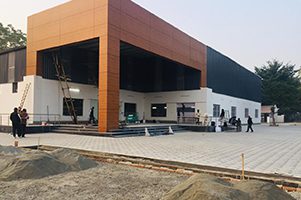

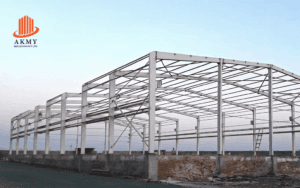
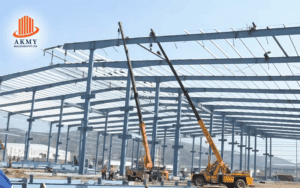
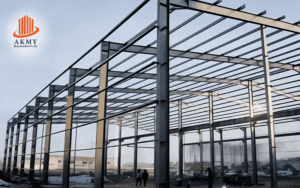
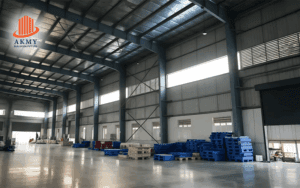
Warehousing decisions often define how efficiently an industrial or logistics business can operate over the long term. Factors such as storage capacity, internal movement, load handling, expansion potential, and maintenance costs are directly influenced by the type of structure chosen. This is where steel warehouse buildings have gained strong preference across industries. Their ability to balance strength, speed of construction, and operational flexibility makes them a reliable solution for businesses focused on performance and growth.
Faster Construction Without Compromising Strength
Time is a critical resource for industrial and logistics businesses. Delays in warehouse construction often translate into delayed operations, lost contracts, or increased holding costs. Steel structures are prefabricated and engineered off-site, allowing for quicker installation once materials reach the site. This significantly reduces construction timelines compared to conventional RCC buildings.
A reputed steel building manufacturer in India designs these structures with precision, ensuring that components fit seamlessly during assembly. Despite the faster construction process, there is no compromise on structural strength. Steel warehouses are built to handle heavy loads, high stacking heights, and constant movement of goods and equipment, making them ideal for high-activity environments.
Large Clear Spans for Efficient Operations
One of the biggest advantages of steel warehouse buildings is the availability of large column-free spans. For logistics operations, uninterrupted floor space is essential for smooth movement of forklifts, automated storage systems, and heavy vehicles. Steel structures allow wide spans without internal columns, creating open layouts that improve workflow efficiency. For industrial facilities, this flexibility supports heavy machinery placement, production lines, and customized storage configurations. As operational needs evolve, internal layouts can be modified without structural limitations—something that traditional construction struggles to offer.
Cost-Effective Over the Long Term
While initial construction costs are an important consideration, long-term operational expenses often matter more. Steel warehouses offer excellent value over their lifecycle. Their durability reduces repair requirements, and steel’s resistance to pests, moisture damage, and cracking ensures lower maintenance costs. Leading steel building manufacturers in India also design warehouses with energy efficiency in mind. Features such as insulated panels, natural lighting provisions, and proper ventilation help reduce power consumption. For logistics businesses operating round the clock, these savings add up significantly over time.
Designed for Scalability and Future Expansion
Industrial and logistics businesses rarely remain static. Expansion—whether in storage capacity, processing zones, or distribution networks—is a natural part of growth. Steel warehouse buildings are inherently modular, making future extensions faster and more economical. Instead of demolishing existing structures, additional bays or sections can be seamlessly added to steel warehouses. This adaptability is particularly valuable for logistics hubs, third-party warehousing providers, and manufacturing units planning phased expansion.
High Load-Bearing Capacity and Safety Compliance
Warehouses often deal with heavy loads, stacked inventory, and continuous equipment movement. Steel structures are engineered to handle high load-bearing requirements while maintaining structural integrity. They are designed to meet safety standards related to seismic activity, wind loads, and fire resistance. When sourced from an experienced steel building manufacturer in India, these warehouses comply with national and international building codes. This ensures safer working conditions for employees and minimizes operational risks, which is crucial for industries handling high-value goods or hazardous materials.
Minimal Disruption and Cleaner Construction Sites
Another often overlooked advantage of steel construction is the cleanliness and efficiency of the building process. Since most fabrication happens off-site, on-site construction involves minimal debris, reduced water usage, and lower environmental impact. For logistics companies setting up warehouses near operational zones or industrial clusters, this minimizes disruption to nearby activities. Steel warehouse buildings also support sustainability goals, as steel is recyclable and generates less construction waste compared to traditional methods.
A Practical Choice for Modern Logistics Infrastructure
The rapid growth of e-commerce, cold storage, and third-party logistics has increased demand for warehouses that are fast to build, easy to maintain, and adaptable to technology upgrades. Steel warehouses support automation, racking systems, mezzanine floors, and advanced material-handling solutions without structural constraints. This is why more businesses are partnering with a trusted steel building manufacturer in India to develop warehouses that are future-ready rather than just functional.
Conclusion
Steel warehouse buildings are not just a construction trend—they are a strategic investment for industrial and logistics businesses aiming for efficiency, scalability, and long-term cost control. With faster execution, flexible design, and dependable performance, steel structures align perfectly with the operational realities of modern supply chains. If you’re planning a warehouse that delivers strength, speed, and scalability, AKMY Buildcon is your trusted partner. As an experienced provider of engineered steel solutions, we deliver customized steel warehouse buildings designed for industrial and logistics excellence. Connect with us today to build a warehouse that supports your business growth.